Loading...
Clear Aligners
Clear aligners are removable plastic trays that move teeth in small steps. Our orthodontist, a certified Invisalign provider, plans each case on an iTero scan and tells you if braces would suit you better.

Clear aligners are a series of thin, transparent trays made from a digital plan of your teeth. You change to a new tray every one to two weeks, and each tray moves the teeth a small amount. The trays come out for meals and cleaning.
At our Malad West clinic, Dr. Ila Vyas, our orthodontist (MDS Orthodontics), plans aligner cases. She is a certified Invisalign provider and uses iTero digital scanning, so the plan starts from a scan of your mouth. We go through the planned tooth movements with you before anything is made.
Aligners are not right for every bite. Part of the first visit is deciding whether they can do the job or whether braces are the safer choice.
When clear aligners can help
- Mild to moderate crowding or small gaps in the front teeth
- Teeth that have drifted since braces you wore as a teenager
- A job or social life where visible metal braces feel like a problem
- A bite that is close to right and needs fine-tuning rather than major jaw correction
- Healthy gums and the discipline to wear the trays almost all day
Your options
Full clear aligner treatment
A complete set of trays for the whole case, usually for crowding, gaps or a mild bite problem. Our orthodontist sets the number of trays after the scan. The plan can change as your teeth respond.
Limited aligner treatment
A short course that moves only the front teeth, for example when a tooth has tilted after a retainer was left off. It suits small movements and not a changed bite.
Braces instead
Fixed metal or ceramic braces stay on and cannot be taken out. We recommend them where the bite is complex, where teeth must rotate or move a long way, or where wearing trays reliably looks unlikely.
What happens, step by step
- 1
Consultation and iTero scan
Our orthodontist examines your teeth, gums and bite and takes a 3D scan with the iTero scanner. We tell you whether aligners are suitable. If your gums or teeth need treatment first, we do that before starting.
- 2
Reviewing the plan
Your scan is turned into a digital sequence showing how the teeth are expected to move. We go through it with you and agree the aim of treatment. The aligners are then made from that plan.
- 3
Attachments and the first trays
Small tooth-coloured bumps called attachments are bonded to some teeth. They give the trays something to push against. You get your first trays, learn to put them in and take them out, and we check that they seat fully.
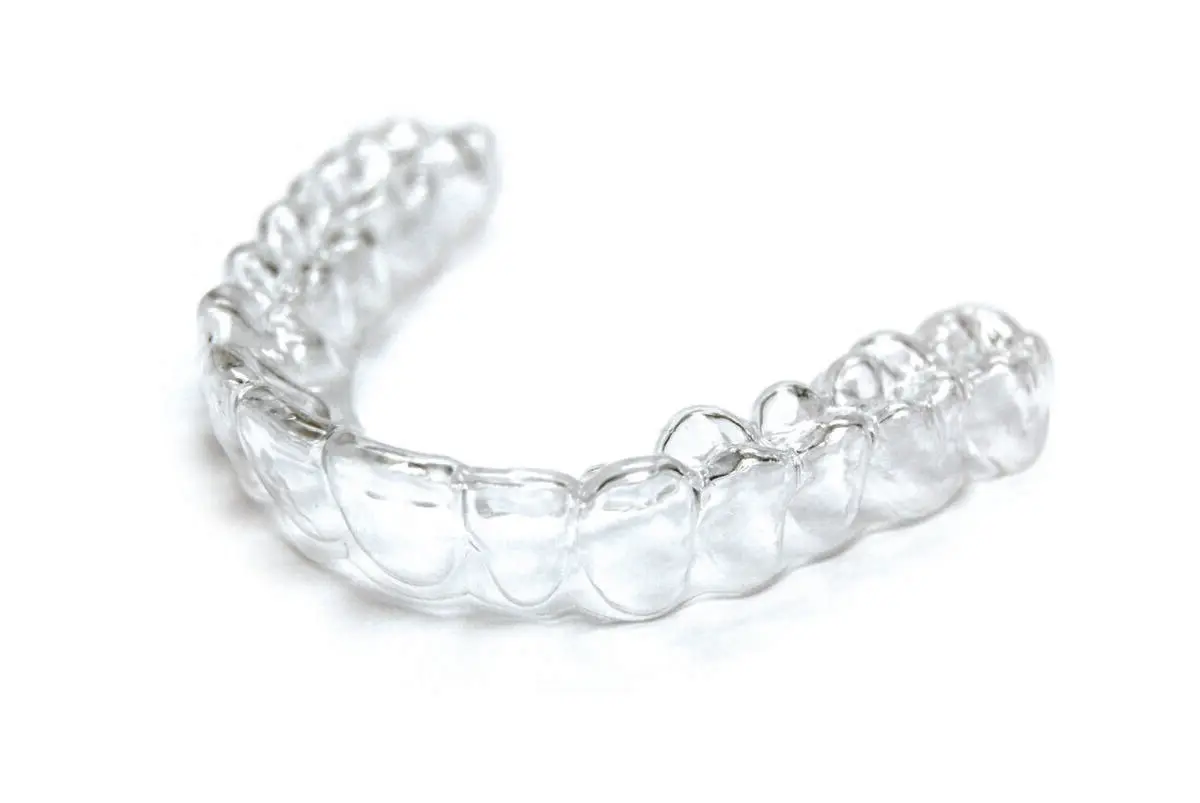
A clear aligner tray, moulded to fit over the teeth. Each tray moves the teeth a small step. Photo: ClearCorrect, Wikimedia Commons (CC BY-SA 3.0), resized - 4
Review visits
You change trays at home on the schedule we give you, and visit us at intervals to check that the teeth are following the plan. Soreness for a day or two after a new tray is common.
- 5
Refinements and retainers
Teeth do not always move exactly as planned. If they are slightly off, a new scan and a short extra set of trays, called a refinement, may be needed. When the teeth are in place, you start retainers.
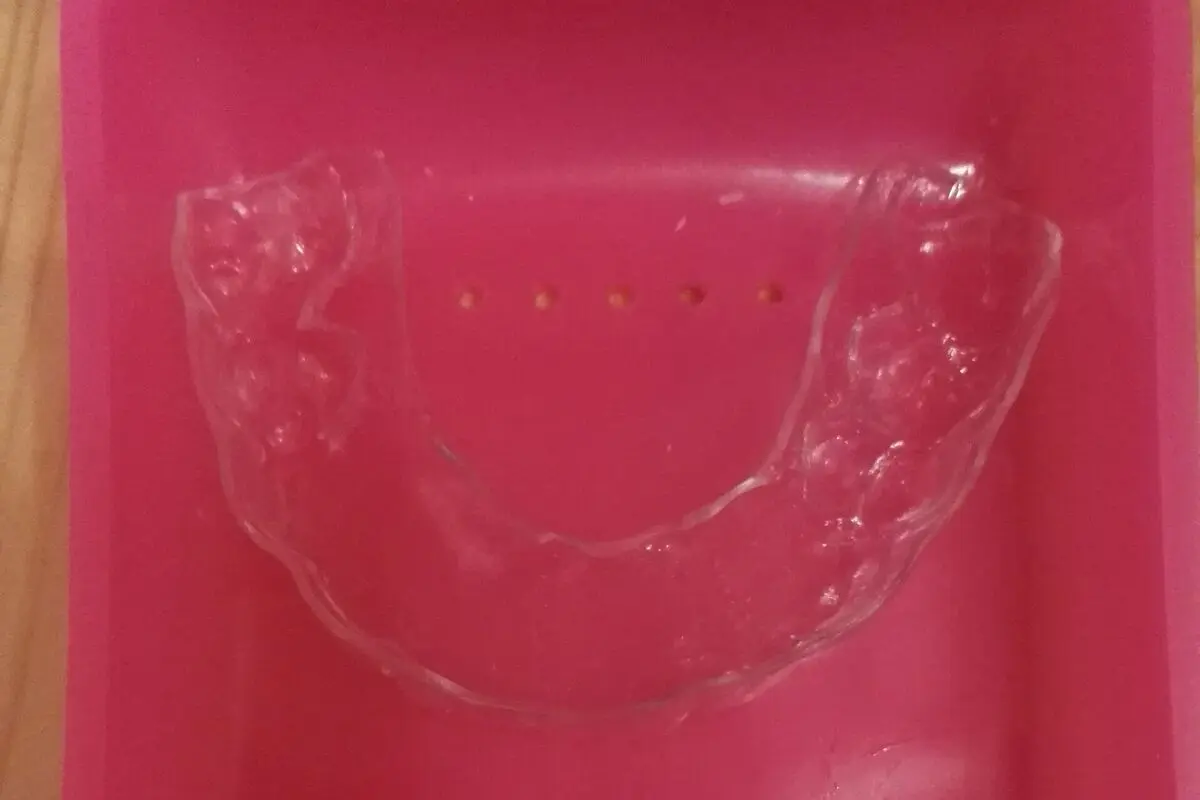
A clear plastic retainer in its case. It is worn after the teeth are in place to hold them there. Photo: Teemeah, Wikimedia Commons (CC BY-SA 3.0), cropped


Want the detail?
Braces vs Invisalign: How to Choose →
After treatment
- Wear the trays 20 to 22 hours a day, taking them out only to eat, drink anything other than water, and clean your teeth
- Brush before putting the trays back, or food and sugar stay trapped against your teeth
- Clean the trays as we show you and keep them in their case, never wrapped in a napkin
- Do not move to the next tray early; each tray needs its full time
- Wear retainers as advised after treatment, because teeth can drift back
When we suggest something else
Braces are the alternative, and in some cases they are the better choice. Severe crowding, a large overbite or underbite, and teeth that must be rotated or lifted are usually easier to control with fixed braces. Braces also suit people who would struggle to keep trays in for most of the day.
If your teeth are only slightly uneven and you mainly want a better front smile, veneers or bonding can sometimes do it faster, but they change the tooth surface.
Cost
Typical cost across Mumbai
- Other clear aligner brands (not Invisalign), full treatment
- ₹40,000 to ₹2,50,000
The number of trays and how complex the correction is decide the cost.
Ranges published by Mumbai clinics and price guides, checked October 2026: WhatClinic, Sabka Dentist. These are not our prices.
What changes the cost
- How much movement your teeth need, which sets the number of trays
- Whether you need a refinement set after the first course
- Whether gum or tooth treatment must be done before aligners can start
- The retainers you need afterwards, and whether you want fixed or removable ones
- Trays that are lost or broken and need to be remade
Visit us for a detailed quote. We examine your teeth and give you a written estimate before any treatment starts.
Who treats you
- Dr. Ila Vyas, Specialist Orthodontist (MDS Orthodontics (SDM Dharwad, Distinction), BDS (Manipal))
Questions patients ask
How many hours a day must I wear aligners?
Usually 20 to 22 hours. They come out only for eating, drinking anything but water, and cleaning. Teeth move in response to steady pressure, so short wear time slows treatment and can stop the teeth following the plan.
Do aligners hurt?
You usually feel pressure or tightness for a day or two when you start a new tray. This tends to settle, and ordinary pain relief is often enough. Tell us if the pain is sharp or stays on.
Can aligners fix every crooked tooth?
No. Many mild and moderate cases suit them, but complex bites often need braces. Our orthodontist will say which applies to you after the scan.
Do I need retainers after aligners?
Yes. Teeth tend to move back towards where they were. Retainers hold the new position, and many people need to wear them at night for years. We explain the schedule and how to look after them.
Can I drink tea or coffee with aligners in?
Plain water only. Take the trays out for tea, coffee, juice and cold drinks, then brush before putting them back. Otherwise the trays stain and sugar sits on your teeth.
Can teenagers use aligners?
Sometimes, if all the permanent teeth are in and the teenager will really wear them. Our orthodontist decides this case by case.
Typical Duration
Often 6 to 18 months, depending on the case
Visit Us in Malad West
A-102, Marve Link Appt., 1st Floor, Marve Road, Mith Chowky, Malad (W), Mumbai 400064
- Monday – Saturday: 10:30 AM – 8:00 PM
- Sunday: Closed